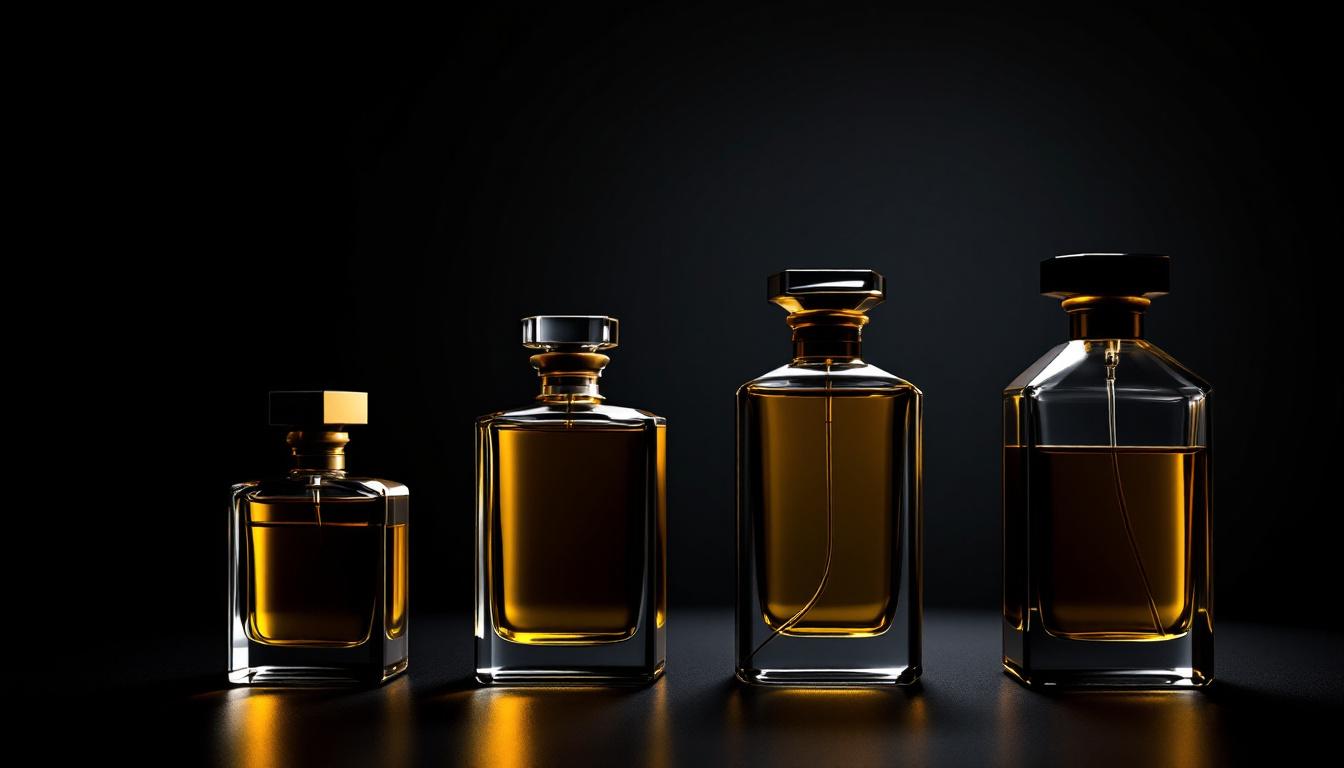
You've probably noticed we call ourselves "Perfume Elixirs." It's not just a nice name (though we think it is). It's actually describing something specific about what we make.
The word "elixir" has a nice ring to it—something precious, something concentrated, something potent. And that's exactly what it means in fragrance terms.
Fragrance Concentration Levels
Here's something that's rarely explained clearly: the difference between fragrances isn't just about what notes are in them. It's also about how much fragrance material is actually in the bottle.
Fragrance products are made by dissolving fragrance concentrate (the actual aromatic molecules) in alcohol. The percentage of fragrance concentrate in the total liquid determines the concentration level, and that percentage has an industry standard name.
Eau de Cologne (EDC): 3-5% fragrance. This is the lightest. It smells beautiful when you first apply it, but it fades quickly—usually within 2-3 hours. It's refreshing, not intense.
Eau de Toilette (EDT): 5-15% fragrance. This is what most mass-market fragrances are. It's a balance between longevity and wearability. It lasts maybe 4-5 hours, and it projects moderately.
Eau de Parfum (EDP): 15-20% fragrance. This is where things get richer. EDP lasts significantly longer—6-8 hours is normal. It's more luxurious to wear because you're getting more fragrance material for your money.
Parfum (also called Extrait or Pure Perfume): 20-30% fragrance. This is concentrated. It can last 12+ hours. It's the strongest you can get without it being overwhelming. This is what luxury houses charge premium prices for.
Fragrance Oil or Elixir: 30%+ fragrance. This is pure concentration. At this level, you're using a tiny amount—often just a few drops—and it lasts almost the entire day. This is what we make at Jam & Bottle.
Why This Matters
The higher the concentration, the longer the fragrance lasts. That's obvious. But it also affects how the fragrance develops on your skin.
With a low concentration EDT, you get mostly top notes. The fragrance evaporates before the heart and base really develop. With a high concentration, you get the full journey. The top notes bloom, then gracefully fade, then the heart emerges, then the base. You're experiencing the full arc of the fragrance.
It's the difference between tasting a bite of something and eating the whole meal. Both are experiences, but they're not the same experience.
There's also an efficiency factor. If you're wearing an elixir at 30%+ concentration, you need maybe one or two spritzes. Compare that to an EDT where you might want to reapply mid-day. Over time, a small bottle of elixir goes further than a larger bottle of EDT.
Why It Costs More
The obvious reason: we're putting more fragrance material in each bottle. More of the good stuff means higher cost.
But there's also a quality thing. If you're going to make a high-concentration fragrance, it has to be well-composed. With an EDT, you can hide mediocre composition behind the fact that it's dilute. With an elixir, every molecule is more present. A poorly made fragrance at 35% concentration is genuinely unpleasant.
So when we're formulating, we're working knowing that everything will be magnified. We have to be more careful, more intentional, more rigorous about how notes blend together.
The Elixir Advantage
Making an elixir means you can wear fragrance more minimally. One spray, done. That's elegant. That's sophisticated. You're not drowning yourself in scent; you're wearing a whisper that happens to be incredibly potent.
It also means you get the full development. You spray No. 2, Spun & Golden, in the morning, and you experience the neroli opening, the vanilla and tonka heart, the amber base. Not in 15-minute increments. Over the whole day. A real arc.
And it means longevity without reapplication. You wake up, you apply fragrance once, and it's there for you the entire day. That's a kind of luxury—not the luxury of expensive packaging, but the luxury of not having to think about it again.
Is Elixir Better Than Everything Else?
It depends on what you want. An EDT has its place. It's lighter, more refreshing, sometimes more appropriate for hot weather or office settings. There's nothing wrong with it.
But if you want longevity, depth, and efficiency, elixir is what you're after. You're paying more per bottle, but you're paying less per wear because a little goes so far.
It's also—and I say this with no bias whatsoever—more interesting. At higher concentrations, fragrances reveal themselves more fully. You get complexity you might miss in a dilute version.
How to Wear an Elixir
Because they're concentrated, the application is different. You don't spray elixir like you spray EDT. You apply it more sparingly.
One spritz on the inside of each wrist. Let it dry. That's probably enough. Maybe one additional spray if you want something slightly stronger, but you really don't need much.
The scent will develop over the next few hours and stay with you. You'll find it gets softer, more intimate, as your skin chemistry interacts with it and the volatile top notes fade. But it doesn't disappear.
And if you layer—if you apply it to hair, or to clothing—remember that a little goes a very long way at this concentration. Be conservative. You can always add more.
The Elixir Philosophy
Calling ourselves "Perfume Elixirs" is about more than concentration, though. It's about treating fragrance as something precious. Something worth taking time over. Something that deserves better than mass production and minimum viable fragrance.
An elixir is, by definition, a precious liquid with transformative properties. Potent, rare, made with care. That's what we're reaching for with every bottle.
You could make a cheaper perfume by just diluting it more. Call it an EDT instead of an elixir. But that's not what we do. We'd rather make something concentrated and powerful and true, even if fewer people buy it.
That's the promise of "elixir." Not fanciness for its own sake. Just integrity in a bottle.